
What I Wish I Knew Before My PPD Diagnosis

When I first experienced deep, debilitating postpartum depression (PPD) in 2021, I genuinely thought my options were limited to “survive it” or “take psychiatric medication and hope it helps.”
There is hope beyond white-knuckling it
That’s not because medication isn’t valuable — it absolutely can be lifesaving. AND, I’d already been on an anti-depressant and an as-needed anti-anxiety medication since long before starting to try to conceive in 2017 (yes, I had checked with both my OB and the high risk MFM team before ever trying to conceive to ensure its safety).
But at the time, I didn’t realize how many emerging treatments, specialized programs, and evolving conversations already existed surrounding postpartum mental health. And honestly, I wish someone had sat me down in the height of my grief and said: “There are more options than you know. There are people studying this. There are treatments being developed specifically for this. There is hope beyond white-knuckling your way through it.”
Because at that point, I was drowning.
I was crying and dissociating constantly
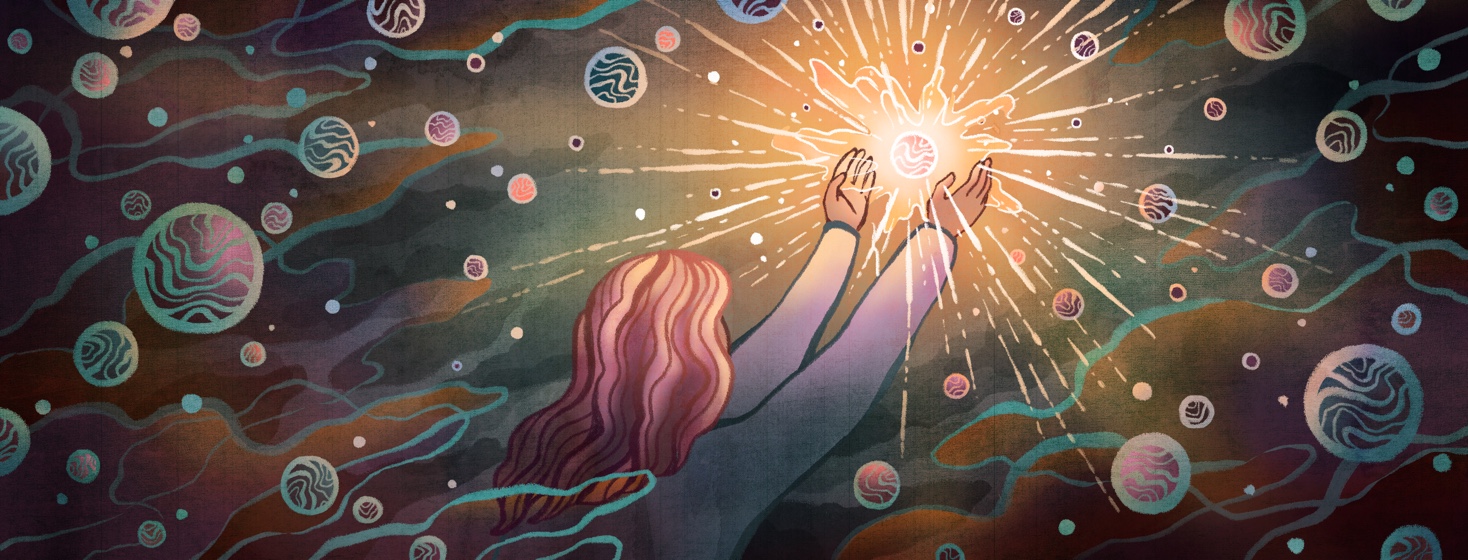
In the fall of 2021, after delivering my twins too early to survive, I entered a level of depression and anxiety that completely altered my understanding of mental health. In retrospect, for about 6 months, part of my soul was left sitting on the floor of our master bathroom where I delivered them, waiting — waiting for them to come back, to be alive, waiting to find myself, to be able to stand up again. I was so completely disassociated from my body.
But I didn’t know that at the time. I was also trying to raise a 2.5-year-old daughter and work 45 hours a week remotely at a job I started just 2 weeks after the babies died. I was sleeping very little, crying constantly, dissociating from my body, struggling with intrusive thoughts, and carrying a grief so large it felt physically inhabitable. And while I did eventually find meaningful support through therapy, medication, and community, I spent a long time believing there wasn’t much else available to me.
A medication specifically for PPD
Recently, the approval of Zurzuvae caught my attention. Zurzuvae is an oral medication designed specifically for postpartum depression. I remember reading about it and thinking about all the women I knew who needed support quickly, who didn’t have the ability to wait months for traditional antidepressants to fully kick in, or who were too overwhelmed to navigate complicated treatment systems while caring for a newborn.1
More comprehensive postpartum mental health programs
While medication innovation matters tremendously, I also wish I had known more about the rise of postpartum-specific intensive outpatient programs (IOPs), day programs, and specialized maternal mental health treatment centers.
Because postpartum depression is not simply depression that happens after you have a baby.
It intersects with hormones, sleep deprivation, identity shifts, physical recovery, grief, trauma, feeding struggles, relationship changes, medical complications, and societal expectations all at once.
More specialized and specific care
And yet, for so long, parents experiencing severe PPD were often funneled into either general therapy or psychiatric hospitalization spaces that weren’t designed with postpartum realities in mind. Now, there are increasing numbers of programs specifically built for perinatal mental health. Some allow parents to attend therapy while remaining connected to their babies. Some offer trauma-informed group therapy specifically for birth trauma, pregnancy loss, infertility, NICU experiences, or postpartum anxiety (PPA).
Others integrate psychiatric care, sleep support, lactation support, and community-building together.
That matters. Because one of the hardest parts of postpartum depression is how isolating it feels.
Struggling to feel like I belonged
I also wish there had been more conversations in 2021 surrounding reproductive trauma and postpartum mental health after loss.
At the time, I struggled deeply with whether I even “counted” in postpartum spaces after delivering babies who died. To be honest, it’s been more than 4 years since I delivered the twins, and there are still people both within and outside of the loss space that tell me my loss was too early to count — that my HCG levels couldn’t have risen high enough to cause PPD/PPA, that my babies weren’t big enough to count as neonatal or infant loss... although they were perfectly formed tiny beings, each with 10 fingers and 10 toes, and now their cremated ashes live in a tiny beautiful urn that catches in my throat every time I look at it on the mantle.
At that time, and honestly, even still, I needed providers and communities who understood that postpartum mental health complications can absolutely occur after miscarriage, stillbirth, TFMR, neonatal loss, and ectopic pregnancy, too.
Why I still have hope
There are still enormous unmet needs. We need more affordable access to specialized care. More culturally competent providers. More support for fathers and partners. More research surrounding the intersection of chronic illness, infertility, pregnancy loss, and postpartum mental health.
More maternal mental health providers in rural areas. More acknowledgment that healing doesn’t follow a 6-week postpartum timeline.
But I remain hopeful.
Because for the first time in a long time, it feels like people are finally paying attention to postpartum mental health in a way that acknowledges both its complexity and its urgency. And I keep thinking about the version of me sitting on the couch in 2021, devastated and convinced she had run out of options.
I wish she would’ve known: The future was already beginning to build something better.